
Cross Hire for Security Companies: How It Works and When to Use It
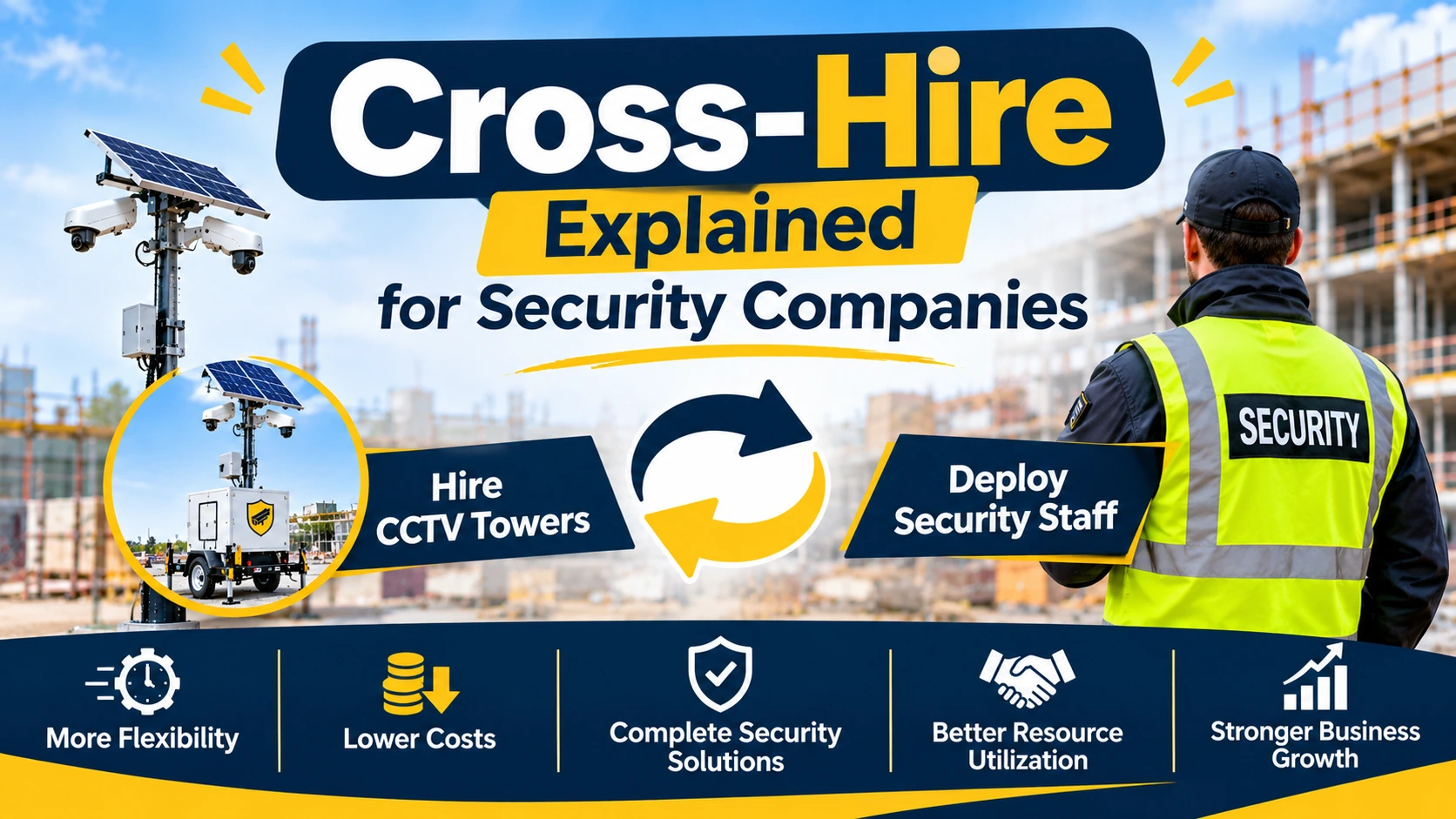
A client rings on Thursday and needs a tower on a compound by Monday. Your own towers are all out on other jobs, and buying another unit means a purchase order, a wait for delivery and a tower that may sit idle when the job ends. That is the moment cross-hire is built for.
This guide is for security companies, not for the end client. It explains how cross-hire works, when it beats buying, and what to settle before you use it. If you want the service itself, Quantum’s cross-hire rental service page covers it.
What Is Cross Hire for Security Companies?
Cross hire for security companies is a simple arrangement. You are the security provider and you hold the client relationship, while a supplier owns the equipment and lends you capacity for the length of a job. When the job ends, the equipment goes back.
It is not a sale, and it is not a subcontract. You stay in front of your client, and the supplier’s job is to get the equipment in place, working and supported. Quantum describes its programmes as flexible cross-hire that lets security providers expand capacity without capital outlay.
The equipment is usually a mobile tower with cameras, a mast and its own power. Quantum’s solar-powered CCTV towers are mains-free, which is why they suit sites a cable cannot reach. A tower that needs no power connection can go where the work is, not where the supply is.
How Cross-Hire Differs from White-Label Rental
The two are close, and the terms often get mixed up. Cross-hire fills a capacity gap for a specific job. White-label rental goes further, because the hardware, reports and support are presented as your own, so your client sees your brand throughout.
Many companies use both. White-label suits an offer you sell as a service all year, while cross-hire suits a surge or a one-off site. Ask what is branded and what is not, because the answer shapes the contract and what your client sees.
When Is Cross-Hire Better Than Buying More Towers?
Buying makes sense when you can keep a tower working. Cross-hire makes sense when you cannot. The test is utilisation: how many days a year would the extra tower actually be out earning?
Five Situations Where Cross-Hire Fits
Cross hire for security companies fits best when demand is short, uneven or uncertain.
- A short-notice job. The client needs cover in days, and buying and commissioning a new unit would take longer.
- A seasonal peak. Events, winter cover for vacant property or a busy build phase can lift demand for a few weeks, then drop away.
- A trial. You are entering a new sector or taking on a new client, and you do not yet know whether the work will repeat.
- A one-off site. The project is unlikely to recur, so a purchase would sit idle afterwards.
- A gap in capability. The site has no power or signal, and your own fleet is not suited to it.
When Buying Is the Better Call
If a tower would be out more days than not, the sums usually favour owning. The same goes where you have long contracts, your own engineers to maintain units and a steady pipeline of sites. Cross hire for security companies still helps as overflow in that case, but it should not be your base capacity.
Do the sum with your own utilisation, not a supplier’s figures. On the buying side, include servicing, storage, transport, insurance and the time a unit spends waiting between jobs. A cheap-looking purchase can cost more than it seems once a tower sits in the yard for a quiet quarter.
How Does Cross-Hire Work in Five Steps?
Every supplier runs cross hire for security companies a little differently, but the sequence is usually the same.
- Brief the supplier. Give the site address, the dates, what the cameras must see and whether there is power or signal. The more precise the brief, the faster and more useful the answer.
- Confirm availability and set-up. The supplier confirms whether it has units for your dates and recommends the number of towers and their positions. Agree these before anything ships, because positions decide what you can actually see.
- Delivery and commissioning. The supplier’s engineers deliver, position, install and commission each tower. Quantum’s engineers are in-house, and rapid deployment, in hours rather than days, is the aim once the set-up is agreed.
- Run the job. The tower records, sends alerts or both. Agree who watches the feed and who responds. Quantum offers optional 24/7 remote monitoring integration, and the arrangement should be written down either way.
- Extend or return. If the job runs on, extend the hire. When it ends, the unit is collected. Agree the notice for both before you start, so a change of plan does not become a dispute.
Most of the value sits in steps one and two. A clear brief and an agreed set-up prevent nearly every problem that appears later, and they take a short call, not a long project.
For a closer look at the equipment behind these steps, see the Quantum CCTV solar tower page.
What Should You Agree Before You Hire?
A cross-hire that goes wrong usually goes wrong on an assumption nobody wrote down. Settle these points before the unit leaves the supplier’s yard, and ask for the answers in writing.
Cross Hire for Security Companies: What to Put in Writing
| Topic | What to settle | Why it matters |
|---|---|---|
| Hire period and notice | Start date, length, and notice for extension or early return | Jobs overrun or finish early |
| Delivery and installation | Who delivers, positions and commissions each tower | Positions decide what you can see |
| Faults and support | Who attends a fault, how quickly, and out of hours | Your client calls you first, not the supplier |
| Monitoring | Record only, your own control room or a monitoring service | An unwatched tower records but does not alert |
| Branding and reporting | What carries your name, and which reports you receive | Your client should see you, not the supplier |
| Damage, theft and insurance | Who carries the risk of hired equipment | It avoids an argument after an incident |
| Client contact | Who may speak to your client, and when | It protects your relationship |
If a supplier cannot answer a line, treat that as an answer. A clear agreement costs nothing to ask for, and it is the cheapest protection you will buy.
Branding and Reporting
Your client hired you, so the reports they read should say so. Ask what can carry your branding, whether that is equipment, cabinets or reports, and what you can see yourself on the feed and the alerts. If branding is not possible, agree how the supplier is described to your client.
Data Protection and Licensing
Cameras that record identifiable people create data protection duties. Read the ICO guidance on CCTV and video surveillance, noting that the ICO has it under review following the Data (Use and Access) Act 2025.
Agree who decides how footage is used, how long it is kept and who answers a request for a copy, and make sure signs are in place on site.
Licensing is the second point. Contracted staff who watch live CCTV of the public may need a licence from the Security Industry Authority, so check the SIA guidance on when a licence is needed before you decide who watches the feed.
Support belongs in the same conversation. Quantum’s engineers are all in-house, with no subcontracted engineers and no outsourced call centres, and support runs 24/7. You can read more about installation and technical support before you agree terms.
What Are the Five Costliest Cross-Hire Mistakes?
These are the errors that turn a convenient arrangement into an expensive one.
- Treating it as a last-minute fix. Calling on Friday for a Monday start leaves no time to site the tower properly. Plan your overflow before you need it, and know who you will call.
- Not agreeing who attends faults. A fault is your client’s problem first and yours second. Settle response times and out-of-hours cover in writing.
- Leaving monitoring vague. A tower that records an intruder helps only if someone sees the alert and acts. Name the person, the number and the next step.
- Ignoring data and licensing. Footage and live viewing carry duties whoever owns the tower. Decide who is responsible before the first night.
- Using cross-hire as base capacity. If a hired tower is out every week of the year, buying may cost less. Review your utilisation every quarter and move the work in-house when the numbers say so.
Frequently Asked Questions About Cross Hire
What is cross-hire in the security industry?
Cross-hire is when a security provider rents extra equipment from another supplier to cover a job. Cross hire for security companies lets you take on work beyond your own fleet without buying more towers.
How is cross-hire different from white-label rental?
Cross-hire fills a capacity gap for a specific job. White-label rental presents the equipment, reports and support under your own brand. Many providers use both, so ask which terms apply.
How long can I cross-hire a tower for?
That depends on the project and the agreement. Hire periods can be tailored to the job, so state the dates you expect and ask about notice for extensions and early return.
Who is responsible for installation and faults on a cross-hired tower?
That depends on the agreement, so settle it in writing before the hire starts. At Quantum, in-house engineers handle installation and technical support, and support runs 24/7.
Do data protection and licensing rules apply when I use a hired tower?
Yes, they can. Footage of identifiable people is covered by data protection rules, and staff who watch live CCTV of the public under contract may need an SIA licence. Cross hire for security companies does not remove those duties.
Need Extra Tower Capacity?
If you need cross hire for security companies capacity for a client, call Quantum on 0333 888 0007 or email comms@quantumcctv.co.uk. Send the site address, the dates and what the cameras must see, and we will tell you what we would check first. You can also request a quote.