

Mobile CCTV Tower Functions: How Off-Grid Units Work, Including in Winter
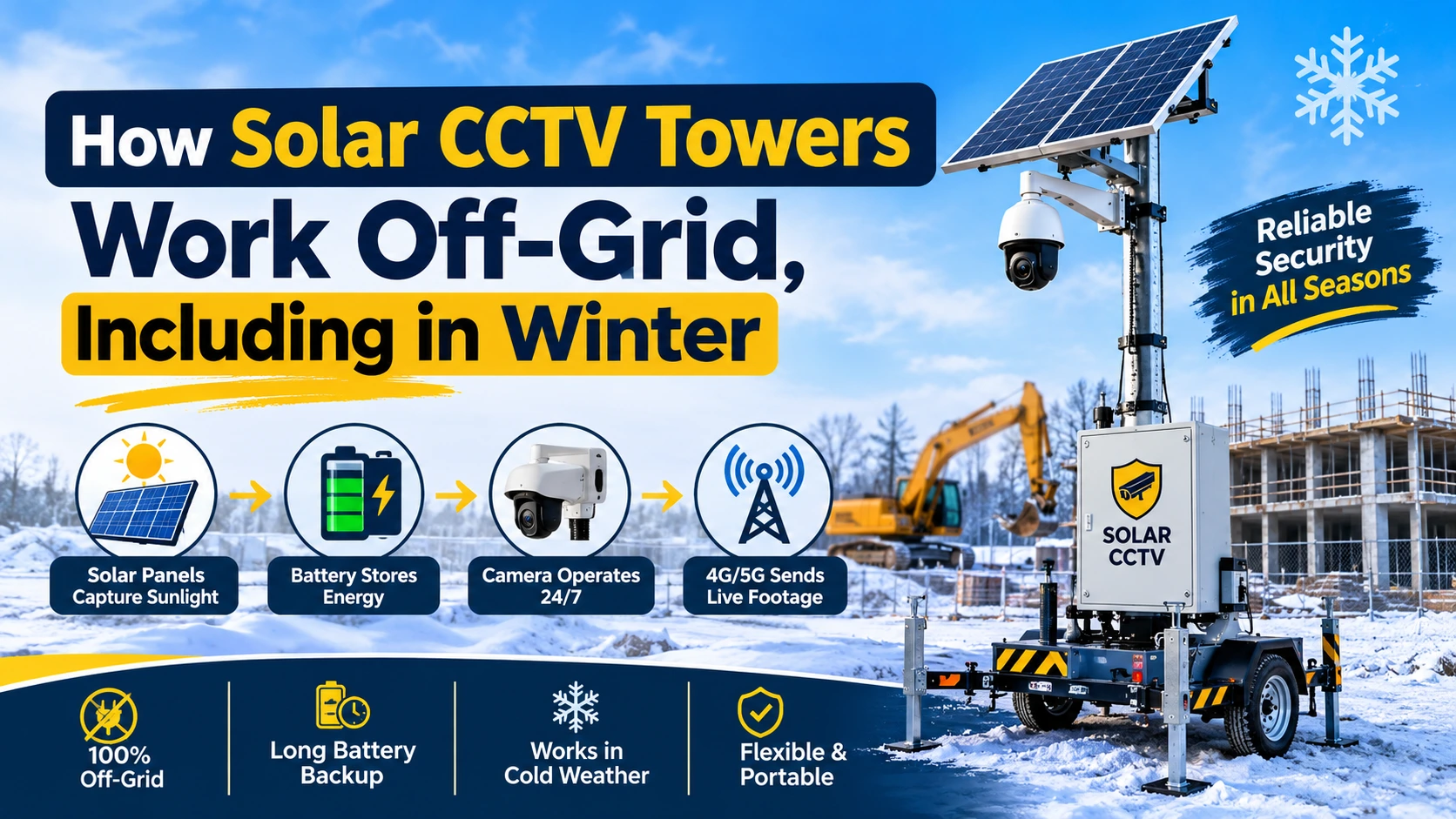
Picture a vacant plot, a solar farm under construction or a depot with no spare power. You need cameras tomorrow, and nobody wants to dig a trench. That is where self-contained units earn their place, and Quantum’s off-grid solar CCTV units are built for it.
This guide is for site managers, contractors and security companies. It explains what a tower does, where the energy comes from, and what to ask before the days get short.
What are the core mobile CCTV tower functions?
Strip away the branding and every unit does the same four things. Each depends on the one before it, so a weakness in power shows up later as missing footage.
Power: panels, battery and controller
Panels collect energy and a charge controller feeds it to a battery. The battery runs the cameras overnight and through dull spells.
Cameras and recording
The cameras sit on a mast to see over fences, stacked materials and parked plant. Footage is recorded on the unit, sent away or both. Mast height and camera positions decide what you can actually see, so agree them before the unit arrives.
Connectivity: getting pictures off site
A tower in a field has no cable to the office. It needs a wireless link to send footage and alerts to whoever is watching. The next sections cover how that link affects the power budget.
Detection and alerts
Detection tells a person when something moves, so they do not need to watch a screen all day. Quantum’s perimeter work builds on the same idea, as described under perimeter intrusion detection.
How does an off-grid tower make and store power?
Think of it as a bank account. The panels pay in, the cameras, radios and recorders draw out, and the battery is the balance. If withdrawals beat deposits for long enough, the balance hits zero and the unit switches off.
Power is not the only drain. Cameras that record constantly, infrared lighting at night and a busy data link all use more than a camera that sleeps until something moves. Ask the supplier what the unit draws at idle and when it is working hard.
What changes in winter?
Winter squeezes both sides of the account at once. Deposits fall because daylight is short, and withdrawals rise because nights are long and cameras work longer.
Shorter days and a low sun
On the shortest day, the Met Office puts UK daylight at under eight hours, and its winter guidance notes that this is nearly nine hours less than midsummer. The sun also sits low, so panels collect less even when it shines. A tower that copes in June can struggle in December.
Cloud, frost and snow
Cloud cuts what the panels collect, and snow or frost on the surface can cut it further until it clears. Rain does some of the cleaning for free, but a mast on an exposed hill is also battered by wind. Ask how panels are angled and whether the supplier can clear or inspect them.
Which mobile CCTV tower functions matter most in winter?
When the account is tight, protect the functions that matter most. Recording and alerts at the entrance matter more than a spare view of a quiet corner. Ask whether the unit can reduce its load as the battery falls, and who is told when it does.
| Winter question | Why it matters | What to ask |
|---|---|---|
| How short are the days at your site? | Less daylight means less energy collected | What is the unit’s output on a dull December day? |
| How long are the nights? | Infrared and recording run longer | What does it draw overnight? |
| What happens as the battery falls? | Some functions may switch off | What is dropped first, and who is told? |
| Who checks it? | Panels can get dirty or covered | How often is the unit inspected? |
Picture a solar farm build in January. The tower stands at the gate on open ground, so nothing shades the panels and they see all the daylight there is. Then a week of low cloud follows a night of frost.
If the unit also runs infrared lighting and a busy data link, the battery can fall a little each day and never fully recover. A supplier who has seen that before will have planned for it. One who has not will find out in your site’s worst week.
How do pictures and alerts get off a site?
Connectivity is the quiet part of the design. A mast in a field has to send pictures over a mobile network, a radio link or another route, and each option has different range, speed and power use.
Check coverage before you hire. A tower on the edge of a mobile signal may record fine and send nothing useful, and nobody finds out until the first incident. Ask for a signal check at the planned position.
Security matters too. A camera on a network is a device that someone could attack, so ask how access is controlled and who can see the feed. The NPSA publishes guidance on network-connected security technologies that is worth reading.
Mobile solar light towers: same word, different job?
A mobile solar light tower lights a site, while a camera tower watches it. People search for both, and the two can look alike from a distance, with a mast, panels and a trailer. Lighting units spend their energy on lamps, which changes the power budget completely.
If you need both light and cameras, say so at the start.
What should a monitoring system do?
A security tower monitoring system turns pictures into action. It decides what counts as an alert, who sees it and how fast someone responds. Without it, a tower records an incident that nobody saw until the next morning.
There are two basic set-ups. A record-only unit saves footage for review after an incident. A monitored unit sends alerts to a person who can check the picture and call someone.
Say someone crosses the fence at 3am. With a record-only unit, you find the footage the next morning. With a monitored one, an operator sees the alert, checks the picture and calls the site contact while it is still happening.
Quantum offers optional 24/7 remote monitoring integration. Write down who gets the alert, what they do and who they call, because a good camera with a vague response plan still fails.
How do you size a tower for your site?
Start with the site, not the equipment. How many views do you need, how long will the unit be there and what time of year does the hire start? A short summer hire and a long winter hire need different answers.
Siting changes the power budget as much as panel size does. A tower beside a hoarding, a stack of pallets or a tall building can lose hours of weak winter sun to shade. Panels in the UK collect best when they face south with nothing in the way, so check what sits to the south of the planned position.
Mast height cuts both ways. A taller mast sees over more obstacles, but it also catches more wind on an exposed site. Agree the position with your supplier on a site walk, not from a plan alone.
Work through these checks with your supplier:
- Where will the tower stand, and does anything shade the panels?
- What must it see, and what can it ignore?
- How will it connect, and has the signal been checked on site?
- What does it draw, and what happens in a run of dull days?
- Who monitors it, and who responds?
- Who supports it if something fails at 2am?
Quantum’s teams are all in-house, with no subcontracted engineers and no outsourced call centres. Support runs 24/7, and you can read about installation and technical support before you ask for a quote. If you need cover quickly, temporary CCTV installations can be deployed in hours, not days.
FAQ
What are the main mobile CCTV tower functions?
A unit makes power from panels, stores it in a battery, records and sends pictures, and raises alerts. Each function depends on the one before it, so a weak power supply shows up later as missing footage.
Do mobile CCTV units work in winter?
They can, if the system is sized for the shortest days. Daylight is limited and the sun is low, so ask for the supplier’s winter figures.
What is the difference between a camera tower and a mobile solar light tower?
A camera tower watches a site and a light tower illuminates it. They use similar masts and panels, but the energy goes to different loads.
Does a tower need a mains connection or a generator?
Not necessarily. Solar units are built for sites without a nearby supply. Ask your supplier what backup options exist.
Who watches the pictures from a tower?
That depends on the set-up. A unit can record only, or send alerts to a monitoring service or a named person on site.
Need cameras on a site with no power?
For a second opinion on tower positions, winter power and monitoring, call Quantum on 0333 888 0007 or email comms@quantumcctv.co.uk. You can also request a quote with your site address and hire dates.